Decoding Boom Lift Joystick and Control Handle Functions
The joystick and control handle are the operator's direct link to a boom lift or scissor lift. When they work well, the machine feels intuitive; when they drift or stick, work slows and risk rises. This article explains how these controls function and what to do when they misbehave, so a small fault does not become a stalled job or an unsafe movement.
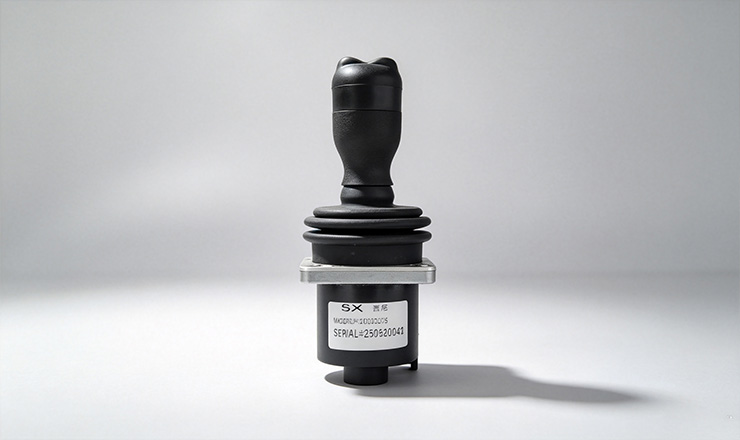
Aerial platform control handle and joystick
How Proportional Controls Work
Modern platforms use proportional joysticks: the farther you push, the faster the function moves, rather than simple on/off. Hall-effect sensors inside the grip translate thumb motion into a signal the controller reads, which drives the hydraulic valves or drive motors. This gives smooth, predictable motion that is easier on the structure and the operator, and it allows fine positioning that discrete switches cannot achieve.
What the Grip Usually Controls
- Lift / lower of the platform or boom
- Extend / retract and rotate on articulated booms
- Drive and steer (on self-propelled models)
- Auxiliary functions: lights, beacon, platform level
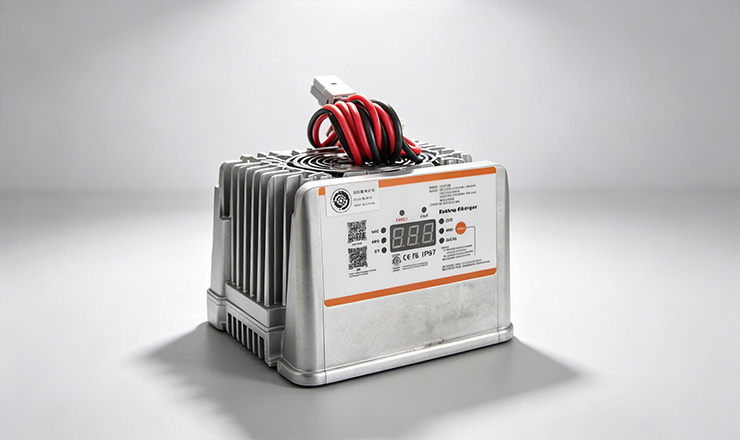
Control handle fitted to a Wanlitong platform
Common Faults
Drifting, dead zones, or no response usually trace to a worn sensor, a damaged coiled cable, or a loose connector. Because the handle sees constant motion, its flexible cable is a frequent failure point. A sticky toggle or key switch on the panel can also mask as a 'handle' problem, so a careful isolation check saves an unnecessary handle replacement.
Quick Checks
- Inspect the coiled cable for broken strands or kinks
- Confirm connectors are seated and dry
- Test the emergency stop and key switch independently
- Note fault codes on the platform display
Fit Genuine When Replacing
Replace a failed handle or joystick with the OEM part matched to the model and serial. A genuine Wanlitong control handle restores the original feel and safety logic; an unknown substitute may need adapter hacking and can introduce unpredictable motion. Keep a spare on the shelf for critical fleets, and train operators to report changes in feel early. Wanlitong stocks handles, cables, switches, and ECUs so a control fault becomes a short swap, not a long outage.
Frequently Asked Questions
What causes joystick drift or dead zones?
Usually a worn Hall-effect sensor, a damaged coiled cable from constant motion, or a loose connector. A sticky panel toggle or key switch can also mimic a handle fault, so isolate carefully before replacing.
How do I test a control handle?
Inspect the coiled cable for broken strands or kinks, confirm connectors are seated and dry, test the emergency stop and key switch independently, and note any fault codes shown on the platform display.
Should I fit a genuine replacement?
Yes. A genuine Wanlitong control handle restores original feel and safety logic; an unknown substitute may need adapters and introduce unpredictable motion. Keep a spare for critical fleets.
How can I make handles last longer?
Train operators to avoid yanking the grip, route the coiled cable clear of pinch points, and keep the connector dry and seated. A short daily check of the cable and a clean storage environment noticeably extend handle life and reduce unplanned control faults across the fleet.
Need a maintenance spare-parts kit?
Joystick, E-Stop, limit switch, cables — factory-direct.